How does swaddling help with the Moro reflex?
This is where things get really practical (and where you might finally get some more sleep).
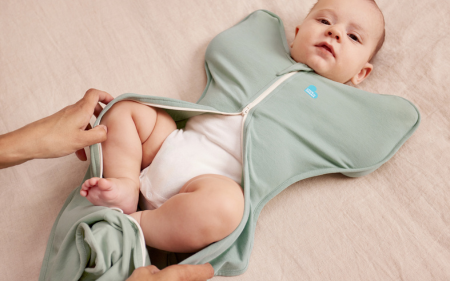
Swaddling works because it gently holds your baby's arms close to their body, recreating that snug, secure feeling of the womb. When the Moro reflex fires, your baby's arms can't fling outward far enough to wake them up. Their brain still sends the signal, but the startle gets "caught" by the swaddle before it disrupts sleep.
Here's why swaddling is so effective:
- It recreates the womb environment. After nine months in a cosy, contained space, the outside world feels pretty open and overwhelming for a newborn. A good swaddle brings back that familiar sense of security.
- It reduces sleep disruptions. Research shows that swaddled babies experience longer stretches of quiet sleep and fewer sudden awakenings caused by the startle reflex.
- It helps your baby self-settle. When the startle response is gently contained, your baby is more likely to drift back to sleep on their own rather than fully waking up.
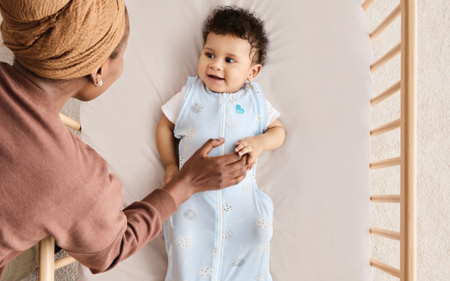
- It supports a consistent sleep temperature. A well-designed swaddle (like the Swaddle Up) keeps your baby comfortable without loose blankets, which is important for safe sleep.
Why arms-up swaddling works
Here's something important: not all swaddling is the same. Traditional swaddles hold a baby's arms down by their sides which some babies love, but many babies actually prefer to sleep with their arms up near their face. That's the natural position most babies adopt in the womb.
The Love to Dream™ Swaddle Up is designed to let your baby keep their arms in that natural "arms up" position while still containing the startle reflex. This means they can self-soothe by touching their face, which helps them settle without needing to be fully unwrapped.