How To Stop A Toddler Climbing Out Of Crib

Back to Baby Sleep
Challenges
 That moment when you hear a thump or walk in to find your little one proudly standing outside their crib railing is often followed by a surge of panic and the realisation, things have to change - and quickly! You’re not alone if you're feeling overwhelmed about what's next but dealing with a toddler climbing out of the crib is one of the most common and challenging phases of toddlerhood. It signals a huge leap in their independence so it's exciting, but also, we need to get you ready for this and keep that great sleep you worked hard for, in tact. 
Love to Dream
5 min read |
23 September, 2026

Just need the quick answer? 

Lower the crib mattress to its lowest setting and remove anything your toddler could use as a step, and keep bedtime calm and predictable. The American Academy of Pediatrics (AAP) says once your toddler can climb out of their crib, it may be time to move to a "big kid" bed. The AAP also recommends switching once your child is 35 inches (89 cm) tall, or when the side rail is less than three-quarters of their standing height.

Why Toddlers Climb Out Of The Crib

Climbing is a normal developmental milestone, not bad behavior. As toddlers get stronger and more coordinated, often somewhere between 18 months and 3 years, they figure out how to climb, and getting over the side of the crib feels like a thrilling achievement.

Common reasons toddlers climb:

  • New physical skills: they can do it, so they want to practice. Again and again.
  • Curiosity: the toddler in their crib sees the railing as a challenge and wants to explore what's beyond it.
  • Seeking connection: climbing out in the middle of the night is often just the fastest route to you, and those cuddles you're so good at giving.

Safety Risks Of Crib Climbing

The most urgent risk is a fall. A tumble from the top of the crib railing onto a hard floor can cause serious injuries, including head injuries and broken bones, so it's worth acting quickly once climbing starts.

Healthy Children recommends moving your child to another bed when:

  1. They're 35 inches (89 cm) tall, or
  2. The height of the side rail is less than three-quarters of their height when standing.


If you do see your child try to climb, keep your reaction calm. Punishment rarely helps, because your toddler isn't being defiant and a big reaction can encourage them to try it again. 

Tips To Prevent Crib Climbing

Lower The Mattress
 This is your first, best, and easiest step. Lower the crib mattress to the absolute lowest possible setting. Even a few extra inches can make a difference. The more distance there is between the crib mattress and the top railing, the harder it is for your toddler to climb over. If your crib has multiple settings, this should be set to the floor level. 
Using A Sleep Sack 
 A well-fitting sleep sack is often the most effective and simplest tool to prevent climbing out of the crib. A sleep sack or cleverly designed Love To Dream Sleep Suit™ with it’s low crotch, restricts the necessary leg movement and mobility required for a toddler to gain leverage and swing a leg over the top of the crib railing. The Benefit: It keeps their feet enclosed, making it difficult to step up or balance on the rail. 

Dreamer Tip

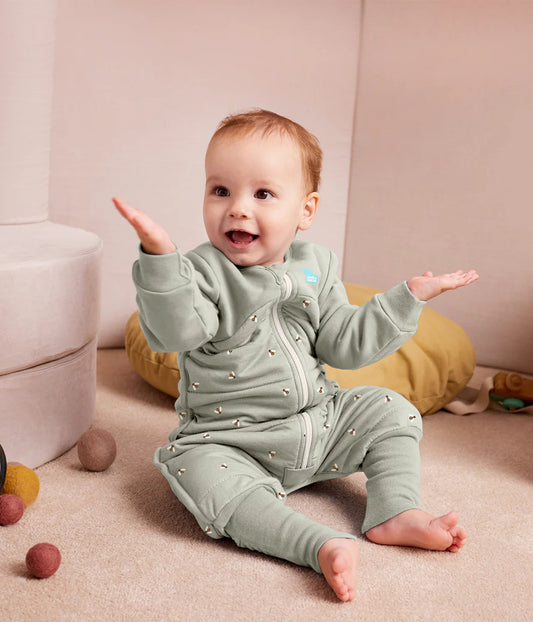
Once your toddler is out of the crib and up on their feet, sleepwear with legs makes more sense, so they can walk around without tripping over a sack. That's where the Love to Dream™ Sleep Suit will be your shining star of the bedtime routine. 

Remove Climbing Aids

Kids are so clever! Take a good look in and around the crib and remove anything that could become a step stool:

  • Large stuffed toys and pillows
  • Crib bumpers and extra blankets (the AAP advises against bumpers in any case)
  • Furniture close to the crib, like a dresser, rocking chair or shelf

Establishing A Consistent Bedtime Routine

The more settled and secure your toddler feels at lights out, the less motivated they are to escape later.

  • Predictability is security: try the same order every night, like bath, PJs, sleep sack, quiet reading and cuddles.
  • Wind down properly: keep the last 15 to 20 minutes low-key and low-light, with no screens or rowdy play.
  • Keep it comfy: soft, breathable sleepwear in the right TOG for the room helps them settle and stay put.

Establishing A Safe Sleep Space

Since your toddler in their crib is now a potential explorer, you need to treat their room as a childproofed space for the entire night.

  • Anchor All Furniture: This is a non-negotiable safety step. Anchor dressers, shelves, and any heavy furniture to the wall using anti-tip safety straps. If your toddler climbs the furniture, this prevents it from tipping over and causing serious injury.
  • Cover Outlets: Ensure all electrical outlets are safely covered.
  • Secure the Door: If your child is constantly escaping, you may need a childproof cover on the inside doorknob or a gate at the bedroom door to keep them safely contained in their room and away from stairs or other hazards in the middle of the night.

When To Transition From A Crib To A Toddler Bed

If you have tried all the prevention tips and your child is still climbing out of the crib, it is time for safety reasons, to make the switch to a toddler bed.

While many sleep consultants suggest waiting until your child is closer to age three for better impulse control, safety is always the priority. If the risk of injury is high, the transition must happen.

Making the Switch Smoothly

  1. Involve Them in the Change: Let your toddler help pick out their sheets or a new cozy companion for their new big kid bed. Frame it as an exciting milestone.
  2. Start with the Toddler Bed: A toddler bed is often lower to the ground, which is safer than a full-size twin bed. Use a bed guardrail to prevent accidental rolling off the crib mattress height.
  3. Embrace "The Walk Back": Your toddler will get out of bed. The key is to be consistent, calm, and boring. Silently walk them back to bed, tuck them in, and leave. Repeat as many times as necessary (seriously it will feel like 100!) but showing no frustration or excitement.

How Comfortable Sleepwear Can Help Get Better Sleep

A comfortable toddler is a more settled toddler. Being too hot, too cold or tangled in kicked-off blankets are all good reasons to wake up and go wandering.

Love to Dream™ sleepwear is designed for exactly this stage. In the crib, the Sleep Bag gives warmth without loose blankets. Once your little one moves
to a big kid bed, the Sleep Suit has legs, so they can stand, walk and move freely while staying cozy all night. Both come in a range of TOG ratings to suit the season.

It won't turn a climber into a sleeper overnight (we are working on that miracle!), but it takes discomfort off the list of reasons to get up.

FAQs About Toddlers Climbing Out Of The Crib

When do kids start climbing out of their crib?

Many toddlers start trying somewhere between 18 months and 3 years, as their strength and coordination develop. Every child is different, so some start earlier and some never try.

How do I keep my toddler from climbing out of the crib?

Lower the mattress to its lowest setting, remove toys, bumpers and nearby furniture they could climb on, and keep bedtime calm and consistent. A sleep sack can make climbing harder, but if your toddler is still getting out, it's time for a toddler bed.

When should I transition from a crib to a toddler bed?

The AAP says once your toddler can climb out, it may be time for a big kid bed. It also recommends moving on once your child is 35 inches (89 cm) tall, or when the crib rail is less than three-quarters of their standing height

Can a sleep sack stop a toddler climbing out of the crib?

It can make it harder, but it won't stop a determined climber. Once your toddler is getting out, switch to a toddler bed and sleepwear with legs, like a Sleep Suit, so they can move around more easily.

Most popular

See all
How To Stop A Toddler Climbing Out Of Crib
Should I Use A Pacifier To Help My Newborn Sleep?
At What Age Do Babies Sleep Through the Night?