From Swaddling to Arms-Free Sleep in 3 Easy Steps

Back to Baby Sleep
Routine
One day your little one is happily swaddled, sleeping like, well, a baby. The next, they’ve figured out how to roll, and suddenly the swaddle that worked so beautifully doesn’t quite fit the moment anymore. If that’s where you are right now - welcome, to the rolling milestone.
Love To Dream
5 min read |
12 December, 2023

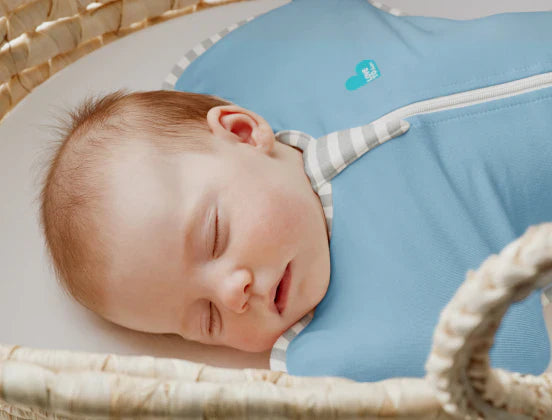
It's an exciting (albeit nerve wracking) time as it inevitably means the sleep you've worked hard to protect is going to be disrupted. Moving from swaddling to arms-free sleep can feel like a big leap, but it doesn’t have to be. Our Transition Swaddle is made for exactly this moment. With the snug, secure feeling of a swaddle, but with clever zipped wings that let you free one arm at a time. So you can follow your baby’s lead and take the transition at their pace, not the clock’s. Here’s everything you need to know, including how to tell when your baby is ready and three easy steps to get you both there.

How do I know when my baby is ready to stop swaddling?

Most babies are ready to start moving out of the swaddle from around 3 months old, however some babies it can be as early as 8 weeks. This can also coincide with when their Moro reflex is starting to fade. Every baby writes their own rule book, so the age matters less than the signs. It’s time to transition away from a traditional swaddle when you notice your baby rolling during play, using their hands to push up, a decreased startle reflex and lifting legs and flopping to one side.

The 2-in-1 Transition Bag

A transition swaddle should make this milestone feel easy for both of you, without losing the comfort your baby has come to know. What you're looking for, is something that mimics the comfort they've come to expect for sleep, but transitions them safely through this milestone, and beyond.

A supportive transition swaddle will have:

  • Zip-off or removable wings, so you can free one arm at a time and follow your baby’s cues.
  • Twin zipper for quick, quiet diaper changes at 2 a.m.
  • Hip-healthy design that still gives little legs room to move and develop
  • One single, secure layer that supports a safer sleep environment, i.e. no loose layers
  • Machine washable and dryer friendly, because life with a baby is messy enough.
  • Longevity, so you can use it for longer than just the transition period!

3 easy steps from swaddle to arms-free sleep

The secret to a smooth transition is doing it gradually. Our zip-off wings are designed to come off one at a time, so you’re never going from fully wrapped to fully free overnight. Here’s how it works.

Step 1: Free one arm

Start by zipping off one wing so a single arm is out, while the other stays snug and swaddled. You can do this during a nap or nighttime. This gives your baby something familiar to hold onto while they get used to the new feeling of a free arm. Give it a few nights. Some babies settle straight away, others need a little longer, and both are completely normal.

Step 2: Free the second arm

Once your little one seems comfortable with one arm out, zip off the second wing so both arms are free. Now they can move, stretch and find their hands, which is a big part of how babies learn to self-soothe. The rest of the suit still hugs them
gently, so it feels less like a leap and more like a small step.

Step 3: Into the sleep sack

With both arms free and your baby sleeping happily, your Transition Bag simply converts into a snug sleep sack for arms-free sleep. Same cozy feeling, a little more room to move.

Milestone mission complete!

What to wear under your 2-in-1 Transition Swaddle

Getting dressed for bed is a bit of a Goldilocks situation. Not too hot, not too cold, just right. What your baby wears underneath depends on the TOG of the bag and the temperature of the room, so a simple room thermometer and dressing guide is your best friend here.

Breathable, comfortable bodysuits or rompers and layers are ideal as you can layer up or down, depending on the temperature.


A quick word on safe sleep.
Whatever stage you’re at, the basics stay the same: always place your baby on their back to sleep, keep the crib clear of loose blankets, pillows and toys, and keep the room at a comfortable temperature. For more, the American Academy of Pediatrics has brilliant, up to-date guidance.

Dreamstretch™ Bamboo

Swaddle to arms-free sleep: FAQ

What age should I stop swaddling my baby?
Most babies are ready anywhere from 8-12 weeks, but it’s really about the signs, not the birthday. Once your baby starts rolling, or is trying to attempt it, it’s time to free the arms.
How long does the swaddle transition take?
There’s no set timeline. Some babies take a few nights, others a couple of weeks. Zipping off one wing at a time lets you move at their pace, and slower is completely fine
My baby hates having their arms out. What can I do?
Totally normal, arms-up is where they’ve felt the most snug. Start with one arm out for a few nights, keep everything else the same (same routine, same room), and give it time before freeing the second arm. Consistency does the heavy lifting.
Can my baby roll over in a Transition Bag?
Yes. Once the wings are off, your baby has the freedom to move and reposition safely.
What do I dress my baby in under the transition bag?
A breathable romper is best but it depends on your room temperature and the TOG of the bag. Always follow a dressing guide for more relevant guidance on what to wear under a swaddle or sleep sack.
Is arms-free sleep safe for my baby?
Once your baby can roll, arms-free sleep is the recommended next step, because they need their arms to move and reposition. Always follow safe sleep guidance: back to sleep, a clear crib with no loose bedding, and the right TOG for the room.
Show moreless

Ready to make the move?

Every baby gets there in their own time, and now you’ve got the steps to get you to arms free sleep safely. Explore our Transition collection and find the perfect fit for your little roller.

More from this topic

See all
Baby Sleep

Routine

Consistency is key! Explore daily routines that make bedtime smoother and sleep more restful.
20 resources
Daylight saving: How to adjust your baby’s sleep routine
Should I Wake My Newborn To Eat?

Most popular

See all
Should I Use A Pacifier To Help My Newborn Sleep?
At What Age Do Babies Sleep Through the Night?
Top Tips for the Second Trimester